
Black History Is LGBTQ+ History
Black LGBTQ+ history
Every February, Black History Month invites us to reflect on the people, movements, and moments that have shaped our nation. At South Carolina Equality, it is also a time to affirm a truth that is too often overlooked: Black history is LGBTQ+ history.
From the earliest days of organized resistance to the ongoing fight for liberation today, Black LGBTQ+ people have been architects of change—often while navigating the compounded realities of racism, homophobia, transphobia, and economic injustice. The modern LGBTQ+ movement would not exist as we know it without Black leadership, courage, and vision.
The Roots of a Movement Built on Liberation
The struggle for LGBTQ+ rights did not emerge in isolation. It grew alongside—and was deeply influenced by—the Civil Rights Movement, labor organizing, and anti-war activism. Black LGBTQ+ leaders brought strategies of nonviolent resistance, coalition-building, and moral clarity into queer liberation work, even when their identities made them targets of erasure.
Many were asked to stand in the background. Others were written out of history entirely. Honoring Black History Month means reclaiming these stories and recognizing that our movement has always been intersectional, even when it was not always acknowledged as such.
Black LGBTQ+ Leaders Who Changed the World
Marsha P. Johnson
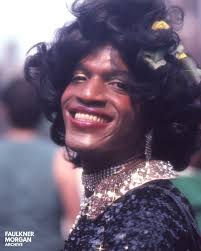
Marsha P. Johnson was a Black transgender woman, activist, and revolutionary whose joy and defiance helped ignite the modern LGBTQ+ rights movement. A central figure in the Stonewall uprising, Marsha co-founded the Street Transvestite Action Revolutionaries (STAR) to support unhoused queer and trans youth—long before mutual aid became a widely used term.
Marsha famously said, “No pride for some of us without liberation for all of us.” Her words continue to remind us that liberation is collective, and that the most marginalized among us must be centered if freedom is to be real.
Bayard Rustin

Bayard Rustin was a brilliant strategist, organizer, and gay Black man whose impact on American democracy is profound—yet too often hidden. As the chief organizer of the 1963 March on Washington, Rustin helped orchestrate one of the most pivotal moments of the Civil Rights Movement.
Because he was openly gay, Rustin was pushed out of the spotlight and forced into the background, even by allies who feared public backlash. Still, his commitment never wavered. Rustin once wrote, “We need, in every community, a group of angelic troublemakers.” His life reminds us that progress often depends on those brave enough to challenge injustice from every angle.
James Baldwin

James Baldwin was a Black gay writer, activist, and truth-teller whose words continue to shape how we understand race, sexuality, love, and power. Baldwin refused to separate his Blackness from his queerness, insisting that both were essential to his understanding of freedom.
In The Fire Next Time, Baldwin wrote, “Not everything that is faced can be changed, but nothing can be changed until it is faced.” His work challenges us to confront uncomfortable truths—and to believe that transformation is possible when we do.
Audre Lorde

Audre Lorde, a self-described “Black, lesbian, mother, warrior, poet,” taught us that there is no such thing as a single-issue struggle. Her writing and activism illuminated the dangers of silence and the power of difference.
“I am not free while any woman is unfree, even when her shackles are very different from my own,” Lorde wrote. Her legacy continues to guide movements that center justice, equity, and collective liberation.
Living at the Intersections
Black LGBTQ+ people have always lived at the intersections of multiple identities—and multiple systems of oppression. Yet it is often those most impacted who lead the most transformative change. The fight for racial justice, gender justice, and LGBTQ+ equality are not separate struggles. They are deeply connected.
Recognizing Black History Month means acknowledging these intersections and committing ourselves to a movement that leaves no one behind—especially Black queer and transgender people who continue to face disproportionate violence, discrimination, and barriers to care.
Honoring Black LGBTQ+ Lives in the South
Here in the South, and in South Carolina specifically, Black LGBTQ+ communities have long organized, resisted, and built joy in the face of adversity. While the challenges are real—political attacks, healthcare inequities, and systemic racism—so is the resilience.
South Carolina Equality’s work is rooted in this legacy. We stand on the shoulders of Black LGBTQ+ leaders who came before us, and we are committed to building a future where Black queer and trans people can live openly, safely, and with dignity.
Moving Forward Together
Black History Month is not only about remembering the past—it is about shaping the future. Honoring Black LGBTQ+ history means listening to Black voices, supporting Black-led organizations, and taking action to protect Black LGBTQ+ lives today.
As James Baldwin reminded us, “Freedom is not something that anybody can be given. Freedom is something people take, and people are as free as they want to be.” At South Carolina Equality, we remain committed to taking that freedom together—boldly, collectively, and with justice at the center.
This Black History Month, we honor the legacy. We uplift the present. And we recommit ourselves to the work ahead.


Comments